
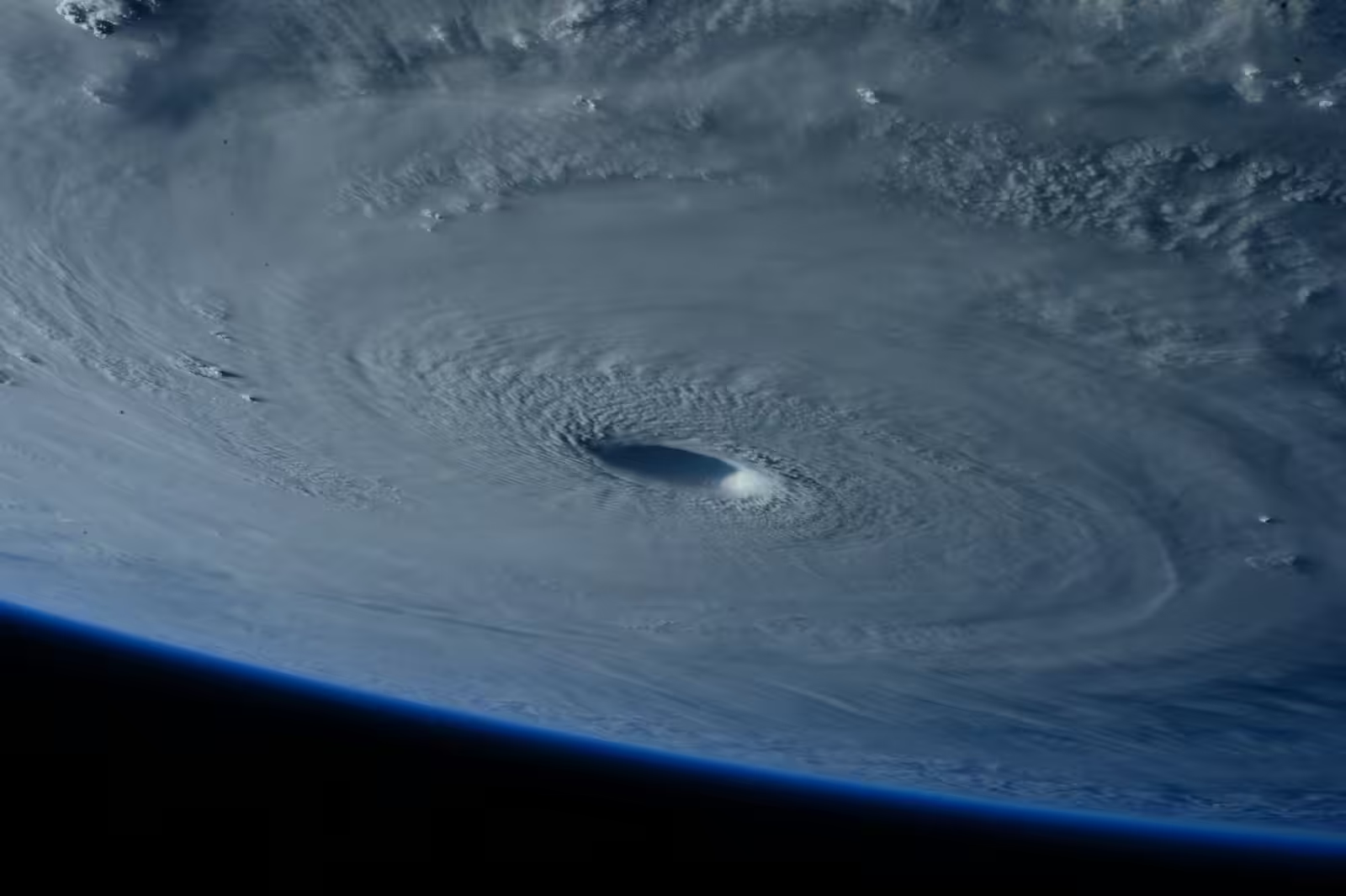

A cyclone may qualify as a force majeure event in an Australian construction contract if the contract contains a force majeure clause defining extreme weather or “cyclones” as a Force Majeure Event. If you have an unamended standard form contract, relief for cyclone-related delays usually falls under extension of time provisions as a Qualifying Cause of Delay.
This guide explains how Cyclone Alfred and other cyclones affect construction contracts and outlines the steps Principals and Contractors should take to protect their contractual rights, project schedules, and financial cash flow.
It goes without saying, however – make sure you and your workers are safe and then that the site is safe, before you move on to the contractual claiming mechanisms.
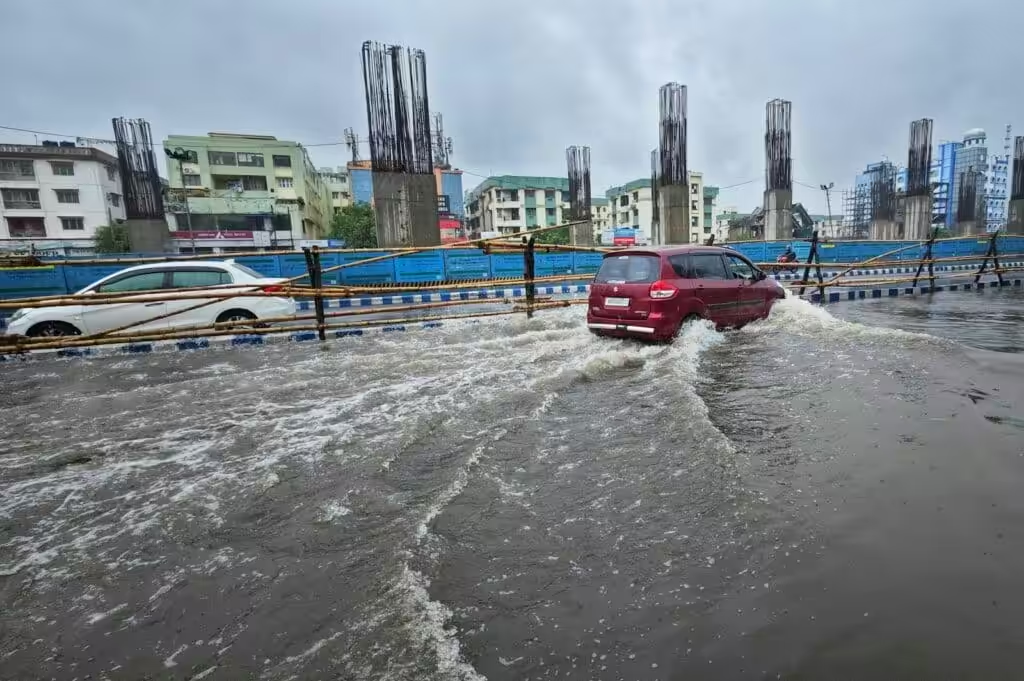
Understanding Force Majeure in Australian Construction Contracts
Force majeure refers to an unforeseen event that is beyond the control of contracting parties and prevents or delays contract performance. It is a contractual mechanism that relieves a party from liability if specific events occur. In construction contracts, force majeure typically covers extreme weather events, pandemnics (since COVID-19), natural disasters, terrorism, government actions, and other uncontrollable circumstances.
Most Australian standard form construction contracts do not contain a force majeure clause unless one has been added through amendments. Without a force majeure clause, Contractors must seek relief under extension of time provisions, with the cyclone being a Qualifying Cause of Delay (or similar wording used in your specific contract).
If a force majeure clause does exist, the wording of the clause will determine whether a cyclone qualifies as a force majeure event and how the Contractor should take action (including which Notices should be provided and when). Otherwise, you would seek an Extension of Time for a Qualifying Cause of Delay.
Does a Cyclone Qualify as a Force Majeure Event?
A cyclone may qualify as a force majeure event if the contract defines “Force Majeure Event” to include cyclones, extreme weather events, or natural disasters. If the contract does not include force majeure as a defined event, then a Contractor may still be able to seek an extension of time for delays caused by the impacts of a cyclone, such as rain and inclement weather, as a Qualifying Cause of Delay.
How Standard Australian Construction Contracts Handle Cyclone Delays
Most standard form construction contracts used in Australia today do not contain a force majeure clause unless amended. However, they do contain extension of time provisions that may provide relief for delays caused by a cyclone.
AS4000–1997 and AS2124–1992
AS 4000 and AS 2124 (unamended) do not contain force majeure clauses. However, clause 34.2 in AS4000 and clause 35.5 in AS2124 provide an extension of time for delays that are beyond the control of the Contractor. Cyclones and extreme weather events may qualify if they delay work. However, the Contractor must comply with time bars by issuing a Notice of Delay and submitting an extension of time claim within the required timeframe.
Under the clause 1 Definitions in AS4000, a qualifying cause of delay is defined to mean:
a) any act, default or omission of the Superintendent, the Principal or its consultants, agents or other contractors (not being employed by the Contractor); or
b) other than:
i) a breach or omission by the Contractor;
ii) industrial conditions or inclement weather occurring after the date for practical completion; and
iii) stated in Item 23.
Make sure you look at Item 23 in Annexure Part A, to check there are no exclusions from the Qualifying Cause of Delay (ie causes of delay for which an Extension of Time will not be granted).
ABIC MW-2018
ABIC MW-2018 does not include force majeure but allows for an extension of time under clause L2 for exceptionally adverse weather. A Contractor affected by Cyclone Alfred may be entitled to an extension of time under this clause.
NOTE: Under ABIC, you must notify of delays within 2 working days of becoming aware of the cause of the delay.
GC21 (NSW Government Contracts)
GC21 does not contain a force majeure clause but allows for an extension of time under clause 10.5 if a delay is beyond the control of the Contractor. A Contractor must provide prompt notice of delays to qualify.
NEC4 (Used in Some Government and Infrastructure Projects)
NEC4 includes clause 60.1(19), which provides for compensation events when a delay is caused by factors beyond the control of the Contractor. However, a Contractor must provide notice within strict timeframes to preserve their entitlement.
Also, watch out for allowance and deeming provisions, with the Contractor being deemed to have made allowances for up to a “one in ten year event” for conditions such as number of days snow, rain, and temperature less that 0 degrees from the Met office. If the actual weather for a given month exceeds any of these values then that would be assessed as a compensation event.
Notices of Delay, Notices of Continuing Delay, and Claims for Delay
Many contracts require Contractors to issue a Notice of Delay within a specified timeframe, often two to five business days from when they become aware of the delay.
If the delay continues, a Contractor may also be required to issue a Notice of Continuing Delay at regular intervals.
Failure to submit these notices within the required time can result in a time-barred claim, meaning the Contractor may lose their right to claim an extension of time, even if they were actually affected by the cyclone. For this reason, it’s very important for the Contractor to get their notices in on time, even if they have to outsource these while they deal with the actual impacts from the cyclone.
A Claim for Delay is different from a Notice of Delay. The Notice of Delay informs the Principal of a delay, while the Claim for Delay formally seeks an extension of time or compensation )if allowed) under the contract.
A Contractor making a Claim for Delay must provide detailed supporting evidence, including:
- Weather records confirming the cyclone’s impact.
- Site reports demonstrating how the cyclone delayed work.
- Communications with subcontractors and suppliers showing disruption.
- Any mitigation steps taken to reduce delays.
Failing to follow the contract’s requirements for notices and claims may result in the claim being rejected, even if the cyclone caused genuine delays. Remember that Claims for Delay also have time bars under most construction contracts.
Time Bars and the Risk of Losing Entitlements
Time bars impose strict deadlines on Contractors to notify delays and submit claims. These time bars may appear in different parts of the contract, including:
- The extension of time clause, which sets deadlines for submitting notices of delay.
- The force majeure clause, which may require notice within a specific timeframe.
- A standalone time bar clause, which may state that failure to comply with notification requirements results in a loss of entitlement.
A Contractor must be cautious about meeting all time bars in the contract, as missing a deadline may mean losing the right to an extension of time or compensation. Watch out for contracts where the standalone time bar / claiming clause overrides provisions in the extension of time or force majeure clause – this can cause you to miss deadlines.
Claiming under a Force Majeure Provision
A Contractor seeking relief under a force majeure clause must demonstrate that the cyclone directly prevented them from meeting their obligations and that reasonable mitigation steps were taken. If the contract does not include force majeure, a Contractor can instead seek to rely on extension of time provisions.
Contractors depending on your relationship with the Principal, make sure you involve them in mitigation decisions you make – otherwise they may refuse to pay your claim down the track.
A Principal assessing a force majeure claim should consider:
- Whether the contract contains a force majeure clause.
- Whether the clause defines force majeure events to include cyclones or extreme weather.
- Whether the cyclone directly prevented or delayed contract performance.
- Whether the Contractor took reasonable steps to mitigate delays.
- Whether the Contractor submitted a Notice of Delay and, if necessary, a Notice of Continuing Delay within the required timeframes.
- Whether the Contractor submitted a Notice of Claim under the correct clause.
Conclusion
Most Australian construction contracts do not automatically classify cyclones as force majeure events unless a specific force majeure clause has been added. If a contract contains a force majeure clause, the wording will determine whether a cyclone qualifies.
If no force majeure clause exists in your construction contract, Contractors may still be entitled to an extension of time under delay provisions where rain or inclement weather may be covered as a Qualifying Cause of Delay. It may be more challenging to claim costs, and that is where you would want to consult with a skilled Construction Lawyer like Rachelle Hare, who can help with analysing your contractual rights.
Cyclone Alfred has disrupted construction projects across Queensland and New South Wales, and both Principals and Contractors should carefully review their contracts, issue timely notices (for Contractors), give the necessary extensions of time to Practical Completion (for Principals), and document all impacts to protect their legal and financial interests.
Affected by Cyclone Alfred and not sure what to do next? Book a free 30 minute consultation with Rachelle Hare. With over 25 years of front-end Construction Lawyer experience, including in top-tier firms and in Tier One and Tier Two Contractors, and with over 5 years working full-time as a Commercial Manager and a Contract Manager, she will be able to guide you on your next steps to get this all sorted out and help you draft the necessary notices.